

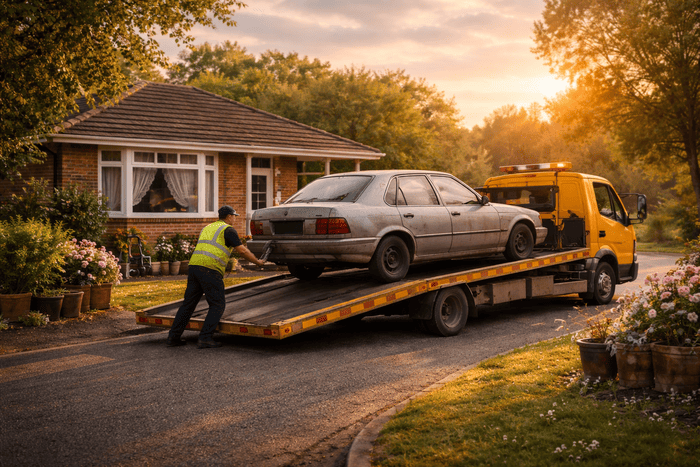
Losing someone close to you is never easy. Alongside everything else, there are often practical things that need sorting, including what to do with their car. If the vehicle isn’t needed, scrapping it can be the simplest and most sensible option.
But can you scrap a car that isn’t in your name? And what do you actually need to do?
Let’s walk through it gently, step by step.
Who Has the Right to Scrap the Car?
When someone passes away, their belongings, including their car, form part of their estate. That means the right to deal with the vehicle usually sits with:
- The executor of the will – If a will exists, this person is legally responsible for handling the estate
- The next of kin or administrator – If there’s no will, a close family member typically takes on this role
If you’re the one handling things, you’re allowed to arrange the scrapping of the vehicle. You don’t need to transfer it into your name first.
Do You Need the Logbook (V5C)?
It helps, but it’s not always essential.
If you have the V5C logbook, the process is straightforward. If you don’t, don’t panic, it’s quite common in these situations. A reputable scrap car dealer can still guide you through what’s needed and help ensure everything is recorded correctly.
The important thing is being able to show that you have the authority to act on behalf of the estate.
What Documents Might Be Required?
To keep everything above board, you may be asked for a few simple documents.
- Proof of your identity – Driving licence or passport
- Proof of address – Utility bill or bank statement
- Death certificate – Confirms the situation
- Proof of authority – Such as a copy of the will or a letter confirming you’re the executor or next of kin
Don’t worry if you don’t have everything immediately. Most companies will talk you through what’s required based on your situation.
Notifying the DVLA
It’s important to make sure the DVLA is updated so the vehicle is no longer registered in the deceased person’s name.
This can usually be done by:
- Sending the relevant section of the V5C to the DVLA, or
- Notifying them online if you have the details
A good scrap car company will often guide you through this or handle it alongside the collection, giving you peace of mind that everything’s been dealt with properly.
What Happens to the Car?
Once collected, the vehicle is processed responsibly and taken off the road for good. You’ll receive confirmation that it’s been dealt with, which is important to keep for your records.
At this point, the car is no longer linked to the estate, and that’s one less thing to worry about.
A Quick Word on Payment
Payment for the vehicle will usually be made via bank transfer — never cash — in line with UK regulations.
If you’re managing the estate, you can arrange for the payment to go into your account or directly into the estate account, depending on how things are being handled.
Take Your Time — There’s No Rush
One thing worth saying, you don’t have to deal with everything at once.
It’s okay to take your time, especially with something like this. The car will still be there when you’re ready, and a good company will approach the situation with understanding and flexibility.
Final Thoughts
Scrapping a car after a bereavement can feel like just another task during an already difficult time. But with the right support, it doesn’t have to be complicated.
As long as you have the authority to act and choose a reputable, trustworthy scrap car dealer, the process is simple, respectful, and handled properly from start to finish.
At Scrap My Car Company, we understand the situation you’re in and aim to make things as straightforward as possible, clear guidance, no pressure, and everything taken care of when you’re ready.
For any more help or advice, check out our expert written guides or FAQs.



