

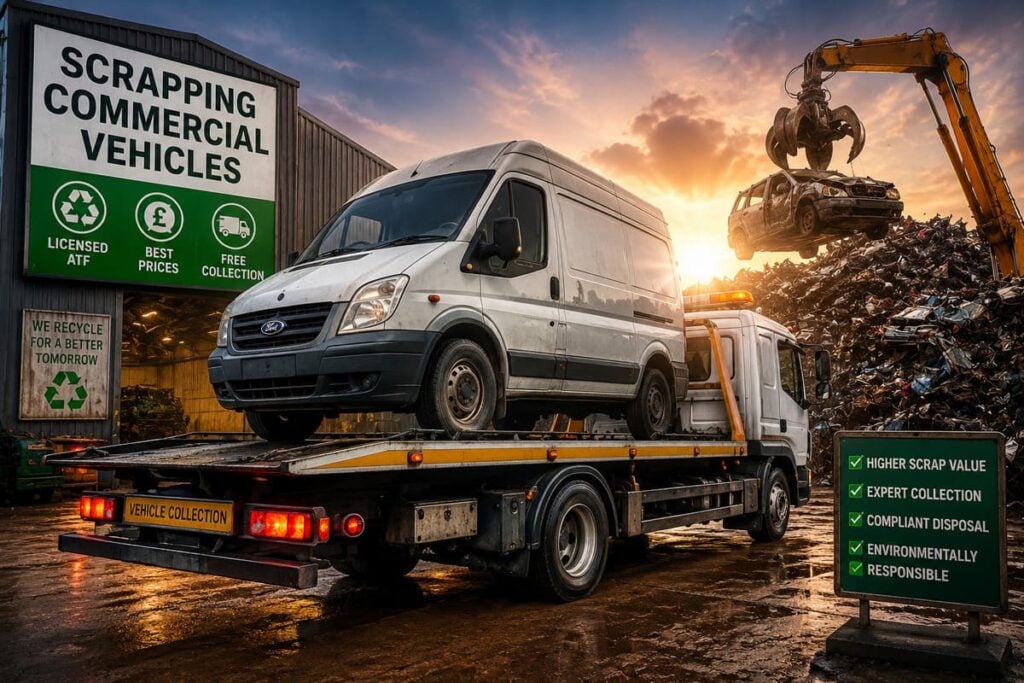
Scrapping a normal car is usually pretty straightforward. Get a quote, arrange collection, hand over the keys, done.
With commercial vehicles, whether it’s a transit van, pickup truck, tipper, Luton van, minibus or even a larger fleet vehicle, there are extra things to think about when it comes to scrapping. More paperwork. Different values. Bigger logistics. And sometimes, stricter rules.
If you’re looking to scrap a commercial vehicle, here’s what you need to know before you go ahead.
What Counts as a Commercial Vehicle?
A commercial vehicle is any vehicle mainly used for business purposes.
That includes:
- Vans
- Pickups
- Flatbeds
- Tippers
- Box vans
- Refrigerated vans
- Minibuses
- Fleet vehicles
- Some larger 4x4s used commercially
In most cases, the scrapping process is similar to a normal car, but the scale and legal side can be a bit more involved.
Commercial Vehicles Often Have Higher Scrap Value
One of the biggest differences is value.
Commercial vehicles are typically:
- Larger
- Heavier
- Made with more metal
- Packed with valuable components
That means they often fetch higher scrap prices than standard cars.
Things like:
- Heavy-duty engines
- Catalytic converters
- Aluminium panels
- Copper wiring
- Large batteries
…can all increase the value significantly.
Even badly damaged vans can still be worth a decent amount due to sheer weight alone.
Collection Can Be More Complicated
A small hatchback is easy to collect. A long-wheelbase van with seized brakes and no wheels? Not so much.
Commercial vehicles often require:
- Specialist recovery trucks
- Winching equipment
- Heavy-duty towing
- Extra space for loading
This is especially true if the vehicle:
- Doesn’t start
- Has accident damage
- Is stuck on-site
- Has been unused for years
Always check whether collection is included in your quote. Some companies quietly reduce the payout once they realise how difficult the vehicle is to move.
You Still Need a Licensed ATF
Just like scrapping a car, commercial vehicles must be scrapped through an Authorised Treatment Facility (ATF).
This ensures:
- The vehicle is dismantled legally
- Hazardous materials are disposed of safely
- The DVLA is updated correctly
- You receive the right paperwork
Avoid collectors offering cash deals with no paperwork. It might seem easier at the time, but it can create serious problems later.
Business Vehicles May Have Extra Paperwork
If the vehicle belongs to a business rather than an individual, there may be extra admin involved.
You might need:
- Company details
- Proof of ownership
- VAT information
- Fleet records
- Permission from the company director or finance department
For leased or financed vans, always check the agreement first. You usually cannot legally scrap a financed commercial vehicle without the lender’s permission.
Don’t Forget About Branding and Equipment
This is a big one.
Before your vehicle gets collected, make sure you remove:
- Company paperwork
- Tools and equipment
- Tracking devices
- Fuel cards
- Personal belongings
And importantly:
- Remove company branding or signage where possible
You don’t really want your old van sitting crushed in a scrapyard with your phone number still plastered down the side.
What Happens to Commercial Vehicles After Scrapping?
Commercial vehicles go through a similar recycling process to normal cars, but on a larger scale.
Reusable parts may be salvaged, including:
- Engines
- Gearboxes
- Doors
- Mirrors
- Wheels
- Shelving units
The remaining shell is then crushed and recycled.
In many cases, over 90% of the vehicle can be reused or recycled.
Can You Scrap a Fleet of Vehicles?
Yes, and many businesses do exactly that when upgrading vans or reducing fleet size.
Fleet scrappage often involves:
- Multiple collections
- Bulk valuations
- Asset tracking
- Coordinated paperwork
Some scrap companies specialise in fleet disposal and can handle everything in one go, making the process much easier for businesses.
Final Thoughts
Scrapping a commercial vehicle is similar to scrapping a car, just bigger, heavier, and sometimes more complicated.
The key things to remember are:
- Make sure your vehicle will be scrapped via licensed ATF
- Check for finance agreements
- Remove tools and branding
- Confirm collection arrangements
- Keep hold of your paperwork
Done properly, scrapping an old commercial vehicle can free up space, remove a liability, and put some money back into your business at the same time.



